Tuesday, January 31, 2023

5 Read Alouds to Support STEM and SEL: Relationship Skills

*Adapted from a post was previously published by Carly and Adam. It is based on STEM and SEL content that I developed.

5 Read Alouds to Support STEM and SEL: Relationship Skills

Social and emotional learning (SEL) has always been important, but we are at a critical turning point of understanding just how important these skills are for our learners. 

The elementary STEM classroom is a great place to begin teaching students the foundational relationship skills needed to be successful in all other areas of their lives. Relationship skills allow your students the opportunity to put other SEL skills like self-awareness (how they feel) and social awareness (how others feel) into action (collaboration).

What is Social Emotional Learning?

CASEL’s Social Emotional Learning Framework include 5 core competencies which present a strong alignment to the work done in STEM. When students are taught relationship skills, they are better able to communicate clearly, listen actively, cooperate, and work collaboratively to problem solve. As they develop their skills, they begin to learn how to negotiate conflicts constructively, navigate settings with differing social and cultural demands, and build leadership skills.

Relationship Skills also include:

  • Developing positive relationships
  • Demonstrating cultural competency
  • Resisting negative social pressure
  • Showing leadership in groups
  • Seeking or offering support and help when needed
  • Standing up for the rights of others

Relationship Skills

Relationship skills are important for our students because they are often asked to work in small groups. It’s easy to take for granted that the students may or may not already know how to work together in these situations. Teaching relationship skills to the students in your classroom will allow them to think about:

  • What does it look like to work within a group?
  • What is my role within the group?
  • What happens if my group fails?
  • What happens if my group is successful?
  • How do I agree with my classmates?
  • How do I disagree with my classmates and still remain respectful?

Incorporating Read Alouds

Integrating SEL in our classrooms doesn’t have to be another thing that we add to our already packed schedules. SEL skills and strategies can be incorporated into the content we are already teaching. There are many connections between the goals of meaningful STEM learning and the tenets of social emotional development.

Here are some great read aloud selections to introduce relationship building. Each book also has a connection to STEM, incorporating ways for students to apply their relationship skills while working collaboratively with others.


Coding to Kindness

Coding to Kindness by Valerie Sousa is about three friends who sometimes get into disagreements. As they navigate these sticky situations, this interactive picture book allows friends to use coding to find solutions. 

In Coding to Kindness, the characters use the directions and sequence of their code to listen to each other, share with one another, and solve problems. Just like friendships, coding takes multiple steps before the code. Each step we take towards being kind to others helps to build our friendship with them.

The book offers some unplugged coding activities for students. Students can also engage in the engineering design process by designing and constructing a model swing for the friends in the story to play on.

Lacey Walker, Nonstop Talker

Lacey Walker, Nonstop Talker by Christianne Jones is the story of an owl who talks and talks. She talked all day and all night until one day, she lost her voice. This unexpected disruption in her day made her realize just how much she was missing out on by talking too much and not listening enough.

With a focus on communication, one partner builds something with building bricks, without showing the final product to their partner. Then, the write down the directions to build an identical item. Then, their partner gets the same set of building bricks and tries to construct the same object. Will the directions clearly communicate the steps?

Rulers of the Playground

Rulers of the Playground by Joseph Kuefler is the story of Jonah who decides to rule over the school playground as his personal kingdom. Everything was going just fine until another friend decided that she also wanted to rule the playground. With divided loyalties, the playground was no longer a fun place to be. 

Using recyclable materials (think: cardboard, clean plastics, or other available craft materials) students will design a playground with inclusion in mind. They are challenged to think about things that kids of different ages would like to play on, incorporate structures that are wheelchair friendly, and include toys for individuals and groups.

The Giant Jam Sandwich

The Giant Jam Sandwich by John Vernon Lord is a clever, rhyming storybook of the townspeople of Itching Down who came together to solve a problem. Their town was invaded by wasps, but they had a plan. Each person played their role to come together to create a giant jam sandwich that doubled as a wasp trap.

Putting together a giant jam sandwich took a lot of work (and an entire town!). Engaging in problem solving and design, students can brainstorm solutions for how they might trap the wasps. 

Zach Apologizes

In Zach Apologizes by William Mulcahy, Zach makes a mistake by pushing his brother, Alex, for taking his favorite toy. When Zach was in trouble, nothing seemed right, not even playing with his toys, but putting his apology into action made everything right again. Zach’s mom walked through the four-square apology to teach him how to apologize to his brother.

With inventing in mind, your students can help Zach apologize by making a toy for his brother. Using recyclable materials, students will sketch their ideas and build a prototype, working through the engineering design process.

STEM and SEL

In schools across the globe, we are working to develop opportunities for our students to build social emotional skills that will benefit them in school and in social settings. While we can teach them these skills, it is even more important to give them the chance to apply and practice these skills in a safe environment. By connecting children's literature that focuses on relationship building with STEM experiences where they can work with others to design, build, and problem solving, we can not only foster SEL development, but also promote STEM learning, as well.

Wednesday, April 20, 2022

8 Tools for Creative Thinking and Play!

*previously published by Carly & Adam 

**This post contains an affiliate link.

Learning through play can engage students by making learning more hands-on and active. We can introduce students to tools that support play-based learning and provide opportunities for students to use these tools throughout the school day and in a variety of ways.

Are you ready to infuse some play-based learning into your classroom? This post will share eight tools (some of which you probably use already) to try with your students, as well as a few quick ideas for classroom use.


  1. Play dough

Grab any color of dough and create anything your imagination comes up with. A character from a favorite book, something from nature, or a favorite pet, play dough can be used to create anything. Bright colors and smooth textures make it a playful tool for any classroom. Play dough can also serve as a tool to fidget with or help as a stress reliever.

2.            Cori

If you haven’t tried Cori yet, you are missing out! This unique cardboard kit allows students to build and design vehicles and contraptions or create something completely on their own. Easy to use and sturdy for building, this tool is perfect for a play break or to incorporate into your next STEM lesson. Add some Cori products to your school makerspace or include it as a building tool in your classroom.


3.            Fancy markers

Smelly markers, fat markers. Bold colors or pastels. Glitter pens or highlighters, kids love creating with fancy markers. Offer any kind of marker for a play break and let students imaginations soar! Students can use fancy markers to sketchnote their ideas after reading a story or to draw a graphic organizer to further their understanding. Write their spelling words in rainbow colors or practice counting by 2’s with “bingo daubers”. Markers can be a playful way to highlight a text or just have fun and doodle.


4.            Puzzles

Jigsaw puzzles offer a space for groups to gather and work together. Digital puzzles can be fun too. Learners might also like word puzzles, math-related puzzles, and brain teasers. All types of puzzles can engage learners in different types of play. Consider having an area in the classroom where students can access different puzzles. These can be used during learning centers, free choice time, or even at recess. Better yet, find ways to incorporate puzzles into your content lessons.


5.            Strawbees

These simple straws and connectors can offer hours of fun. In a learning center or for a play break, students can build on their own or use the idea cards that come in the Strawbees kits. Construct a house or even a skyscraper. Build a build or a helicopter. Students can play freely with Strawbees or build to meet a specific challenge.


6.            Sidewalk Chalk

Write your name or your vocabulary words in squiggly rainbow letters. Draw a map or try some hopscotch. A little chalk and an empty sidewalk are an invitation for little kids (and big ones, too) to play. Take is outside to create a Venn diagram or to write math facts. Sidewalk chalk will make any lesson a little more playful.


7.            Specdrums

From Sphero, this hands-on tech tool offers creative kids the chance to make and remix their own music. Add the Specdrum rings to your fingers, then tap any surface to create different sounds and beats. This active technology allows anyone to become a music maker. Students will love exploring sounds with this tool, while others might create a soundtrack of their very own.


8.            Canva

This app isn’t just for graphic designers. Canva is a cool digital tool for making just about anything--slides, posters, or invitations. Creative kids can use Canva’s free platform to explore with colors, images, fonts, and stickers bringing to life whatever comes to mind. Create a story map or an image of your favorite character. Design a brochure of a location you are learning about in social studies. Canva is easy to use and designs can be downloaded and shared.

Want to play?

These aren’t the only tools that promote play in the classroom. You may use different tools depending on the type of play that you want to encourage. Think about any tool that sparks student interest while encouraging them to think in creative and interesting ways.

We can unlock creativity by offering students different types of building materials, tools that encourage movement, or materials that inspire art. All of these will foster a playful mindset in the classroom and encourage your students to engage with others in play!


Monday, April 11, 2022

8 Children's Books That Inspire Play

 *previously published by Carly & Adam

We can inspire playful learning in our classrooms through the activities we plan, the materials we offer our students, and through the books we read. Play can be fostered when we play a game, introduce a fun new tool, or when we offer students creativity challenges.

Students enjoy different types of play. Some will prefer physical play, while others might like creative play. Think about the different ways that you can infuse playful experiences into your classroom.

Books are a great way to provide inspiration and share playful ideas with your students. Any of these books could be a perfect read aloud selection or an introduction to a playful activity that you offer your students.

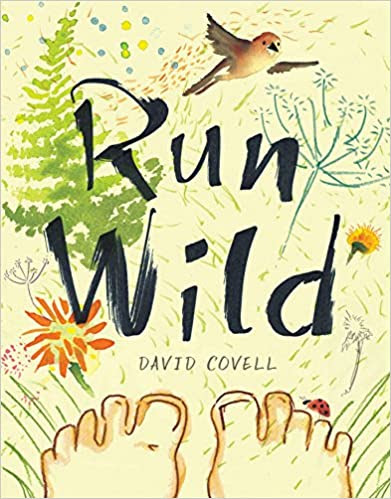
1. Run Wild by David Covell

This book will prompt students to put down their devices and head outside to explore the outdoors. The sights and sounds of nature are shared in this beautiful rhyming tale. Go outside for a nature hunt, search for insects and animals, or take photographs of plants and flowers. Look at the sky and feel the wind blow. Encouraging outdoor play will open new opportunities for students. 

2. The Paper Kingdom by Helena Ku Rhee

A little boy spends the night in an office building where his parents work. There they pretend they are in the “Kingdom of the Paper King.” The parents tell a story of kings, queens, and dragons, entertaining their son while they clean the office. Students can create with paper too, folding, constructing, and imagining. Paper crowns, thrones, or swords, students can create their own imaginary kingdom right in your classroom!

3. Move! by Steve Jenkins and Robin Page

Full of different animal movements, this book will get students up and moving. Swinging, leaping, dancing, and climbing, students will have fun trying to do each movement. This book introduces some unusual animals and interesting opportunities to move. Incorporate animal movements for a brain break or as a playful way to line up for lunch. Make your own game where hopping, slithering, and flittering are the way to navigate through the classroom space.

4. How to Find Gold by Viviane Schwarz

Anna and Crocodile head out on an adventure to find gold. Together, they draw a map to find their gold. Crocodile draws and tells a story about pirate ships and sea monsters. They head out to sea on their adventure until they find their treasure. Students will love the chance to create their own map. Trade maps with a friend and see if you can follow their directions to find the riches. Imagine the pirates are after your treasure. Write a creative story to tell what happens. Act out the story. You can even make props and costumes to go with it.

5. Please Bring Balloons by Lindsay Ward 

This story will activate the imaginations of your students. Colorful illustrations of a wonderful carousel and the notes written by a polar bear to a young girl. Together, they fly over the town before arriving at the North Pole for a polar bear party.

6. What If . . . by Samantha Berger

This story will inspire students to write, draw and fold paper to tell stories. The young girl shares the creative ideas she will try: carving her chair into an airplane, painting on her walls, and removing the floorboards. Drawing in the dirt or making shapes in the snow, there is no end to her creative imagination.

7. Beautiful Oops! by Barney Saltzberg

A fun book that shows kids that it’s OK to get messy. Vibrant and colorful, our mistakes can turn into something amazing if we open our imaginations. Papers can tear and paint can spill, but there are always new possibilities that come from an oops. What kind of classroom mistakes can we turn into something creative and beautiful? Scraps of fabric, broken crayons, or pieces of cardboard can be transformed into something new.

8. Also an Octopus by Maggie Tokuda-Hall

A playful approach to storytelling, this quirky book about an octopus will make kids laugh while also inspiring them to write their own creative stories or build their own purple spaceship out of found materials, or plan a parade with musical instruments. 

Pick a book!

There are so many great children’s books that inspire play and prompt students to get creative. These books (and so many others) can amplify play-based learning while also focusing on the joy of reading. Silly books, colorful books, and imaginative books are perfect to spark some play in the classroom.


Tuesday, March 15, 2022

14 Diverse STEM Picture Books for Elementary Students

*previously published by Carly and Adam 

Our classroom libraries and the stories that we share with our students should be reflective of the diversity that makes up our world. Every child should have the opportunity to see themselves represented within a main character, a story setting, or a book author.

Whether sharing a book about a student of color or one that depicts a unique culture from around the world, it is our responsibility to highlight diversity, equity, and inclusion within our read aloud selections. This is especially important in STEM, demonstrating that science, technology, engineering, and math are accessible to ALL students.

This post will share 14 engaging STEM picture books that showcase diverse characters, authors, and topics. Along with each book summary, there are a few hands-on activities to support elementary learners.


1. Big Rain Coming by Katrina Germein

This colorfully illustrated book tells a story of an Aboriginal community waiting for rain in Australia. It shows how rain, or lack thereof, has an impact on plants, animals, and people. 

  • Design a device that will collect rainwater. Think about the ways that water can be used to help others.

  • Observe and graph the weather for a week. Which weather occurred the most? Were there any big rainstorms?

  • Conduct an experiment. Plant two seeds. Water one with rainwater and the other with tap water. What happened? What differences do you notice?

2. Wild Berries by Julie Flett

A Native American boy and his grandma walk through the woods picking berries together. Throughout the story, keywords are also shared in Cree, the language of the Plains Indians. 

  • Construct a basket or bucket for Clarence to carry his berries in.

  • Weave your own spider web using string.

  • Use a map to locate the region where different Native American tribes live. 


  • 3. Ruby’s Birds by Mya Thompson

  • Ruby and her neighbor head out for a walk in Central Park. Ruby wants to sing and talk but her neighbor is quiet and serious with the hope that they will see a warbler. 

    • Build your own binoculars and head outside to see what birds you can find. Create a chart or graph to show the results.

    • Construct a bird feeder so that local birds will gather to eat.

    • Research different types of birds and create a model of your favorite. 

4. Nya’s Long Walk: A Step at a Time by Linda Sue Park

Nya and her sister walk from their village to the watering hole to get water for their family. When her sister got sick, Nya had to carry the water and her sister.


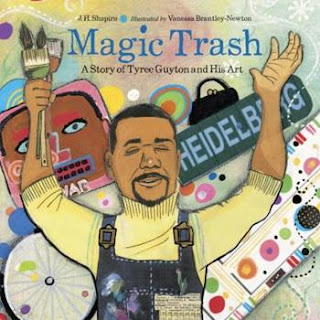
5. Magic Trash by J.H. Shapiro

Tyree Guyton’s family didn’t have enough money to buy new toys, so he collected things to make his own. Inspired by his grandfather, he went to art school and used his skills to brighten up his neighborhood.

  • Use craft sticks to build a small structure.

  • Collect found materials to construct a vehicle that can travel across the room.

  • Plan a community beautification project.

6. Sofia Valdez, Future Prez by Andrea Beaty

Sofia was a helper from an early age, spending time with her grandfather, Abuelo. She learned early how to take action and advocate for her community. Sofia used her talents and skills to make a difference!

  • Plan one way that you will help a friend or neighbor this week.

  • Design a community park that will serve the interests of the people in your neighborhood.

  • Create a poster (physical or digital) to bring attention to an important community issue.


7. The Proudest Blue by Ibtihaj Muhammad with S.K. Ali

On the first day of school, two sisters walk together. The younger sister tells a story of pride about her older sister wearing her hijab, but the other children don’t understand why she wears it. The story focuses on pride of culture and family, above all.

  • Construct something that symbolizes your family or culture.

  • Create a video to explain why your family is important and share the video with others.

8. Peter’s Chair by Ezra Jack Keats

Peter has a new baby sister and he’s not too sure how he feels about it. All of the things that used to be his are now being given to the new baby. When he realizes that he’s too big for those things, including his chair, he helps his dad paint them for his sister.

  • Construct a chair out of newspaper. Can you build it strong enough to hold you?

  • Think about an old item that you can repurpose and turn it into something brand new.


9. Patience, Miyuki by Roxane Marie Galliez

Miyuki and her grandfather visit the garden on the first day of spring. Miyuki asks many things in nature like the clouds, the waterfall, and the creatures to help her. They all try to teach her to be patient, but Miyuki has a hard time waiting.

  • Try some paper folding and create an origami swan-like the one on the cover of the book.

  • Learn about the flowers that bloom in the springtime where you live. Plant some flower seeds and watch them grow.

10. Jabari Tries by Gaia Cornwall

Jabari is determined to create a flying machine that will zoom across his yard. His sister really wants to help him. They work together through different designs until their flying machine is successful.

  • Construct a ramp that will help you to launch a flying machine (or another vehicle). 

  • Design and build a flying machine and see how far it will fly.

  • Take a look at another Jabari story that helps to practice SEL strategies.

11. Invent a Pet by Vicky Fang

Katie wanted a unique pet. She uses an extraordinary machine in her living room that would help her invent a pet of her very own. The machine creates all sorts of animals until finally, Katie designs one that is just right for her.

  • Imagine a pet that you would like to invent and build a model of what it would look like.

  • Create a new formula that Katie’s machine might use to create something brand new.

12. Galimoto by Karen Lynn Williams

Kondi collects all sorts of items in an old shoebox. He uses the items to make things. He’s saving wire to make a “galimoto.” Galimoto means car in Chichewa, the official language of Malawi. Kondi bargained and traded for the things he needed to finally create his own toy car so he could play with the other children in his village.

  • Use pipe cleaners and other recyclable materials to make your own galimoto.

  • Design and construct a different type of toy. What will it be made from? Who will play with it?

13. Ada Twist, Scientist by Andrea Beaty

Ada was curious and had lots of great ideas in her head but did not speak until she turned three. That’s when all of her questions came out and she explored everything in sight. Ada hypothesized and experimented to learn about the things she was curious about.

  • Conduct an experiment with your senses and categorize objects based on their scents.

  • Brainstorm some topics you are curious about. Create a hypothesis and design your own experiment using the scientific method.

  • Complete an experiment of your own by making elephant toothpaste.

14. The Boy Who Harnessed the Wind by William Kamkwamba and Bryan Mealer

William lived in a small village in Malawi where there was no power for lights. He was interested in how things worked, he read books, and even built some things on his own. He used materials from the junkyard to build a structure to use wind to create energy for his village.

  • Deconstruct an old toy or broken piece of electronics and find out what’s inside.

  • Use recycled materials to build a truck, like William did.

  • Build a wind turbine or another way to harness wind power.

Picture books are a great way to introduce interesting people and cultures to your students. It is important for all students to see themselves in the selection of books that you read aloud. Highlighting people from different places and those with diverse backgrounds helps students to celebrate the uniqueness of those around them.

Through our read aloud selections, we can build an interest in STEM and show our students the diversity all around us.

What other great books would you add to the list?

Wednesday, January 12, 2022

Winter STEM Ideas

*Previously published by Defined Learning.

Stuck inside? During the cold months of winter, it is easy to get bogged down by the weather, gray skies, and cold temperatures. Whether we are at home or in school, we can engage learners in meaningful STEM learning that reflects the winter months.

Students can get involved in winter STEM learning through inquiry and engineering design challenges. These opportunities allow learners the chance to fuel their curiosity on different topics and continue to apply their creative problem solving skills throughout the year.

With many schools engaging in remote learning, the ideas shared in this post can be implemented in school or at home. Think of the ways you might explore the cold or build a better winter gadget as a part of STEM learning.

Explore the Cold


Think of all the cold weather things that students can explore during the winter months. This is a great time for inquiry-based learning and the discovery of why things are the way they are in winter. This ongoing exploration can start by generating a list of winter questions:

  • What do snowflakes really look like?
  • Why do animals hibernate in the winter?
  • What makes cars slide on the ice?
  • How long does winter last?
  • Where does the word blizzard come from?
  • Does the winter season look different across the globe? Why?

Students can explore these STEM-related topics independently, with a partner, or with the entire class. These can be posted to your class website or displayed on a wall in your classroom. Uncovering the answers to these questions can be an opportunity for students to engage in research, discussion, and experimentation. It might even be the springboard into a project-based learning experience or a genius hour opportunity for students. Students can share the answers to the questions by creating a video, blogging, or building a model. The open-ended nature of inquiry-based learning means that students can show their understanding in a way that fits their knowledge, skills, and interests.

Build It Better

Setting up engineering design challenges for students is a great way to keep their minds thinking and their hands actively working. Building something better allows students to reflect on things that already exist (products, experiences, processes) and figure out ways to improve them.

  • Slippery Sledding - With a layer of fresh snow, the kids are heading outside for a sled ride. Bundle up and grab your sleds or snowboards. Why do some sleds work better than others? Research (and try out!) different types of sleds or snowboards. Which materials work best? Plastic, metal, or something else? What shape makes for the smoothest ride? Sketch and design a better sled or snowboard. Students can even build a prototype as a part of the design process.
  • Shovel It - When the heavy snows come, it is time to bring out the shovel or maybe the snow blower. What features make shoveling the snow easier? How many different types of snow shovel designs exist? What makes one shovel more efficient over another? Can you design one that looks better, is easier to grip, or lighter when lifted? What could you add to a snow blower to make it run more smoothly? All of these design components can be researched and considered within the engineering design process.
     
  • Snow Fort - Once all that snow is piled up from shoveling, take advantage and build a snow fort. Surely, we all remember doing this as a child or with our own children. Snow forts can come in many shapes and sizes. You can build an igloo with snow bricks or dig a tunnel into a snowy dome. The possibilities are endless for learners who want to create a fun spot for winter. Expand on this activity and have students sketch and design a model for a snow fort. What shape will it have? How many people will fit inside? (This could be practical or a snowy “dream” house.) Infuse some math and have students include the dimensions for the fort. Tap into some technology tools and have students use Sketches School or Paper to create their images digitally. Student designs can be posted on the class website or even shared on social media.


Of course, STEM learning can be explored all year long. Design challenges and exploration in science, technology, engineering, and math can happen no matter the weather. Keep the STEM learners in your life engaged by incorporating these opportunities into the classroom this month!

Thursday, January 6, 2022

Integrating STEM and SEL: 5 Benefits For Your Students

*This post was previously published by Carly & Adam. 

A first grade teacher welcomes her students back to the classroom. She is excited to have a busy space, full of learners talking, working, and playing. Her excitement is balanced with concern as she knows that many students are nervous to return to school and some may be coming for the first time in a long time. She has planned fun icebreaker activities, reading lessons, and cooperative learning tasks. Not only does she want to build a sense of classroom community, but she also wants to welcome students into a safe, collaborative, and enjoyable learning environment. 

She plans to do several read alouds with a focus on starting a new school year, making new friends, and how to work together. She shares the book The Name Jar and other stories that help students develop self-awareness that is important at the first grade level. She has planned some getting to know you activities where students communicate with one another and share their interests. She understands that building relationships are critical in school and in life. These students work together on some problem-solving tasks.

These activities will help students develop and learn together, fostering collaboration skills along with building new knowledge. When combined, these activities also connect two important instructional ideas, teaching STEM and providing a foundation for social emotional learning in school.

STEM education and Social-Emotional Learning (SEL) have many common components that align including: 

  • Teamwork: the importance of working as a team but also recognizing your own strengths and weaknesses. 

  • Relationship Skills and Self-Awareness: the challenge of developing an awareness of others while continuing to build confidence in yourself. 

  • Social Awareness: the reward of having positive relationships and the hard work that goes with creating them. 

  • Responsible Decision-Making: the understanding that the choices you make have consequences for yourself and those around you.

It makes sense to provide instruction that can build skills in both STEM and SEL. These two paths may seem different in some ways, but they have many strategies in common. STEM and SEL can work together to accomplish similar goals. When taught in alignment, students can reap the benefits of this integrated approach. 


Here’s a closer look at the 5 benefits of integrating STEM and SEL:

 1. Promotes Academic Growth

Students who are struggling with their own social emotional development may be coming to school, but they aren’t necessarily ready to learn. When we find ways to address social emotional needs in the classroom, we can remove those barriers to learning and promote academic growth. If we can fill some of their social and emotional needs through teaching social skills, then students can begin to attack the content in STEM and other subject areas.

In the classroom: The first grade teacher used read alouds to engage students in the topics of empathy, reputation, and growth mindset. In turn, when she planned a read aloud STEM challenge for her class after reading The Bad Seed, she hoped that she would see students activating those skills. Since the students have also discussed working together and solving problems, they were able to use that knowledge when the teacher challenged them to design, build, and test a seed home for The Bad Seed. This challenge has allowed students to recognize their strengths and limitations with a well-grounded sense of confidence and purpose. Because the students learned the skills to be self-aware and effective in small group settings, they were able to succeed in the challenge.

2. Offers Hands-on Connections
When hands-on opportunities are embedded in content learning, students are more engaged and can better grasp the information. As we provide social emotional learning strategies for communication and organizational skills, students can practice them within the STEM learning tasks we design, in turn giving them a hands-on experience connected to their social emotional development.

In the classroom:
 In a kindergarten classroom, the teacher talked with her students about self-management. She read the story My Magic Breath. The story teaches students to use mindful breathing strategies when they need to calm down. The class made their own pendulums with markers, string, and tape to practice different breathing techniques. Now the students have a physical tool to help them to practice their breathing with something they designed and built themselves!

3. Provides Practical Application

We can equip our students with skills to communicate, collaborate, and make responsible decisions, but if we don’t give them the chance to practice these skills, we are missing a big opportunity. Engaging in a science experiment or a building challenge requires teamwork. Problem-solving can provide practical application for students who are developing their social emotional learning strategies.

In the classroom: A class of 4th graders has been working on responsible decision-making skills and their teacher is encouraging them to utilize different strategies to stay focused to meet their goals. In a small group, they create a plan for cleaning up and improving the school grounds. The students work together, using their personal strengths, to increase the success of the group as a whole. Their project requires STEM skills like design, innovation, and engineering, but also self-awareness, social awareness, and responsible decision-making.

4. Increase Positive Interactions

Part of social emotional wellness means being able to connect with others in a positive way, communicating, and building relationships with those around you. Students need to practice navigating these interactions and using the right language to engage with others. These are a natural part of work in STEM and makerspaces, as students work with others to design, construct, and give feedback to one another.

In the classroom: The second-grade class is trying their first engineering design challenge. The teacher has assigned each student a role (team captain, materials manager, head architect, and testing supervisor). The students embrace their roles and work collaboratively to accomplish their challenges. Once teams have completed one iteration of their design, they move around the room and provide feedback to their peers, building positive communication skills and deepening understanding in the classroom. 

5. Build Skills For Life

As students learn social emotional skills alongside skills in science, technology, engineering, and math, they are preparing for daily interactions with others, but also for potential careers. While some careers may function in isolation, most require positive interpersonal skills and working with a team. Opportunities in STEM offer the chance to build the skills which will help them in school, career, community, and beyond. 

In the classroom: Within the STEM lab, you’ll rarely hear anyone say, “Why do I need to learn this?!?” Students understand that solving problems and working together are a part of life. They see it in action when they are challenged to construct new living spaces, design new contraptions, and take steps toward coding. STEM learning experiences allow them to better understand themselves and others which will benefit them during all stages of their life.
STEM and SEL are building blocks. When stacked together they can create a strong foundation for our students. The benefits of incorporating these two instructional areas exist for both students and for teachers. SEL isn’t something extra that we need to teach. It’s not the latest “add-on.” It is the foundation on which we have been planning STEM learning all along!